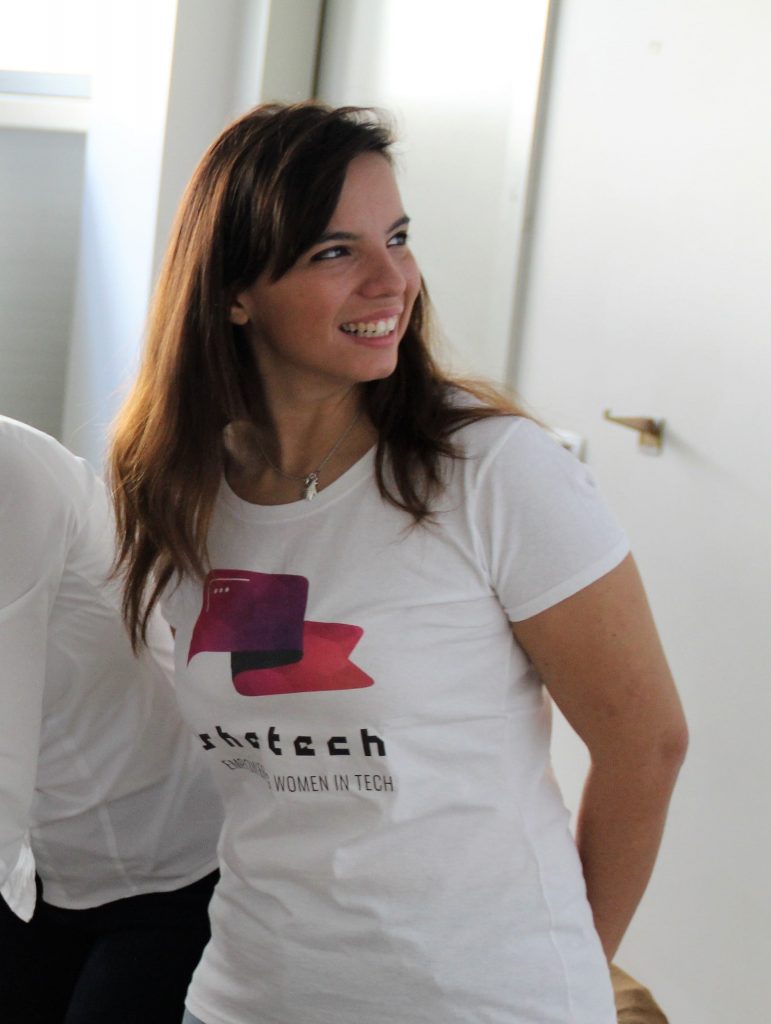
 In Italy, what we usually call “gender gap” in the IT sector is still a problem to be overcome. Along with the theme of IT knowledge, there is also the study of STEM subjects, which in Italy is on the right track, but is not yet at the level of many European countries, our neighbors. For this reason, SheTech Italy was born, an association with a social purpose to attract women, young and old, to STEM subjects.
What are some of the biggest challenges that women who want to pursue a career in the world of technology face today?
Being a woman in IT careers is not easy, but certainly less difficult than in the past. We have many great examples to appeal to Sheryl Sandberg, COO at Facebook; Ginni Rometty, CEO of IBM; Marissa Mayer, former CEO at Yahoo!. These are all international examples, but also in Italy, we have prominent profiles: Barbara Cominelli, COO at Microsoft Italia, Mirella Cerutti, country manager at SAS Italy, ecc… The biggest challenge is to believe in ourselves until the end. Commitment, study and the desire to move forward are the main ingredients. As SheTech Italia we know that there is still a long way to go, for this reason, we are so committed to empowering women in the tech sector.
Do women need special policy against discrimination at their companies?
There is no real law written in Italy, but in recent years many Italian companies have activated special programs of “Inclusion & Diversity” to get as soon as possible to balance the gender gap. In the codes of conduct, the chapter “female empowerment” is very much felt.
What kind of educational opportunities in Software Engineering or any other IT-related specialties do you have in Italy?
All the major Italian universities offer excellent software engineering courses, both in public and private universities. It is possible to access targeted courses, masters funded by companies to deepen their knowledge in the development of the code. However – in our opinion – the most important and significant training is always on-the-job and as practical as possible.
Thanks to SheTech Italy we offer several courses focused on the major programming languages.
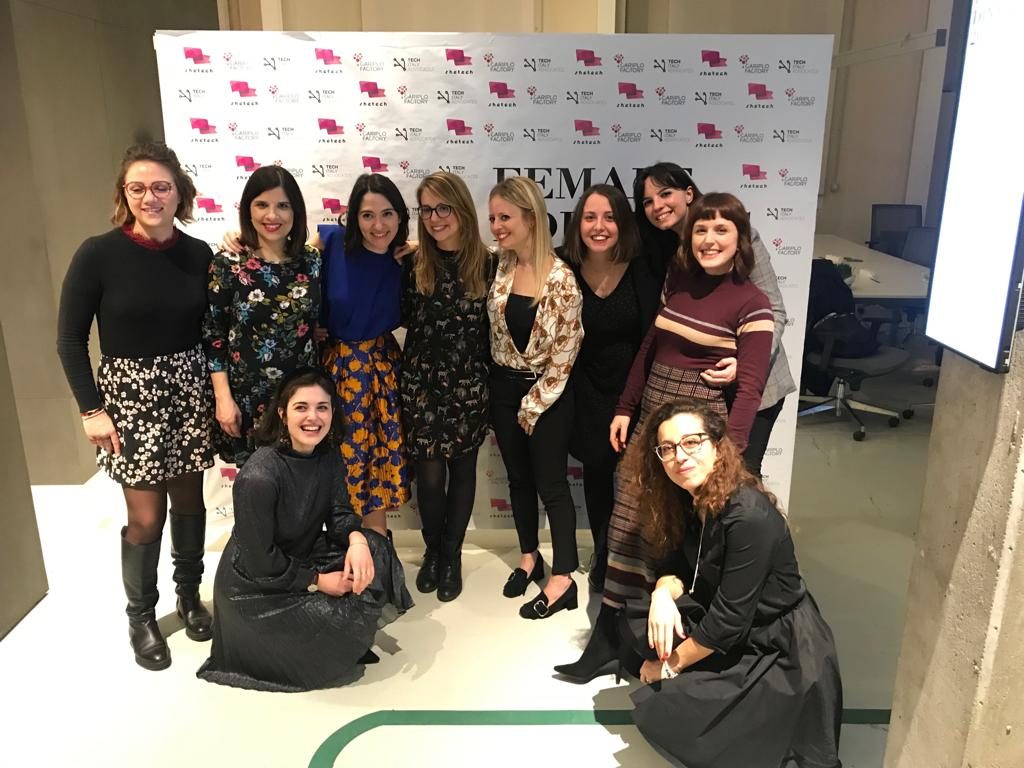
What steps should be taken to attract more women to tech? What kind of events and plans do you have in mind on SheTechItaly?
Fostering technical subjects is already done in primary school. Many schools adhere to coding initiatives offered by associations and organizations dedicated to this type of activity.
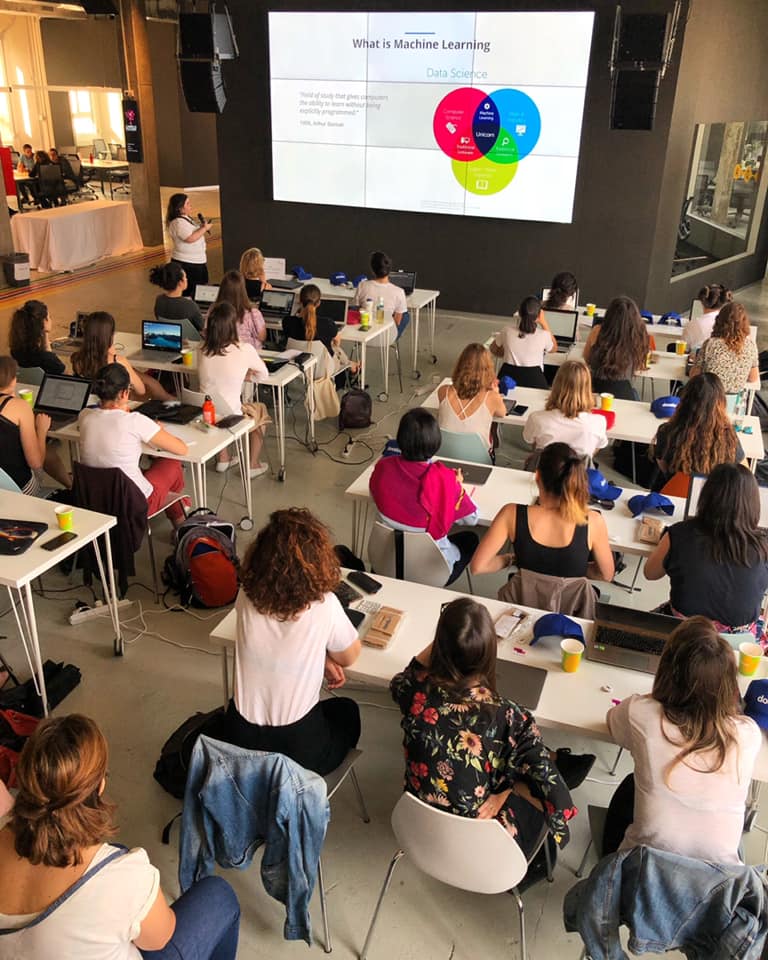
During these events, children from 7 to 17 develop software at school and learn to coding, understanding the value of this ability. SheTech Italy also proposes initiatives of this type, organizing days of full-immersion to coding for all levels of knowledge, from the basics to the most advanced levels. For example, we organized workshops on Javascript with eBay and Phyton with Docebo.
In general in Italy, even if the university offer is very complete and on average “our” engineers are theoretically better prepared than the rest of Europe, the practical aspect is less developed. We should put our “hands in the bag” much more and have more job opportunities once we leave university.
Would you say from your own experience… Have you seen improvements in diversity over the years?
 Absolutely. In recent years, as mentioned before, we often talk about “gender gap”, “inclusion&diversity”, “women empowerment” and companies have grasped this need from below, investing budgets in initiatives in favor of inclusion&diversity. We often also organize breakfasts at tech companies, where the main managers/representatives tell our community about their steps towards equality and “women empowerment”.
What is it that you enjoy most about your current job? What kind of technologies do you use for it? Do you write code?
I currently work as a digital consultant a leading international consulting firm specialized in technology solutions and digital transformation programs. I am very satisfied with my journey and – fortunately – I have never felt discriminated against, perhaps also because of my personality. I don’t write code, I graduated in Economics but I had to learn to interact with developers and engineers.
Large companies have all their positive and negative sides, certainly what I have learned from my path is the management of time and deadlines, the interaction with others and the construction of the team. For continuous learning, I study new technologies to propose on the market: applied artificial intelligence, blockchain and IoT are the most recurrent themes in this period.
What would be your message to all people trying to get into technology?
To keep exploring. The world of technology is so wide and able to offer so many opportunities, that you can’t just sit back and watch and do nothing. SheTech Italy tries to pass on these messages and we are doing our best to be a driver capable of enabling girls, students, and workers, to this world of opportunities.
I conclude with a quote from our President, Lisa di Sevo: “SheTech Italy want to be a change agent in the Italian tech scenario, offering a collaborative environment that makes women more and more aware and able to assert themselves personally and professionally. We want to be a facilitator and point of reference for all those women who work in the tech and digital world”.
]]>Our audience is mainly developers but anyone interested in JavaScript and its many applications is most welcome.
 How many people are part of the community in Madrid? Are there a lot of Java developers?
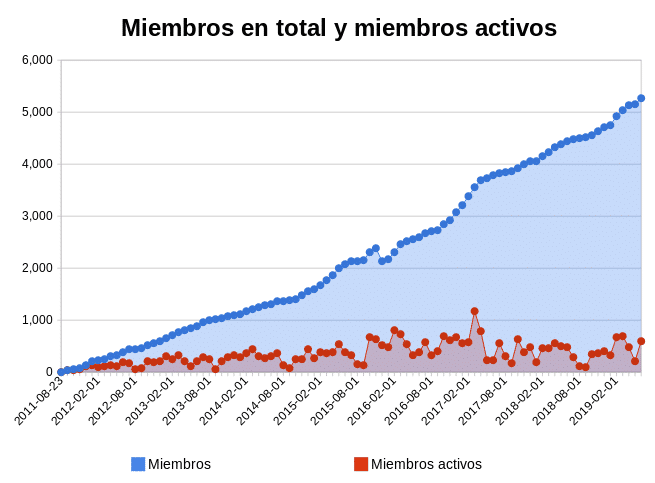
According to Meetup, we are over 5300 javascripters. Most of them are JavaScript (not Java 😉 developers. Our stats are public:
https://www.meetup.com/es-ES/madridjs/stats/members/?range=all
How often do you meet? Where?
We usually meet once a month, with a summer break from July to August. At this point we have done 99 Meetups. We don’t have a fixed place; we get offers all the time from friendly companies, bootcamps and coworking spaces, and use whatever place is more adjusted to our needs.
How many people are participating in the MadridJS? What is the ratio of men: women?
The number of active members is usually around 500:
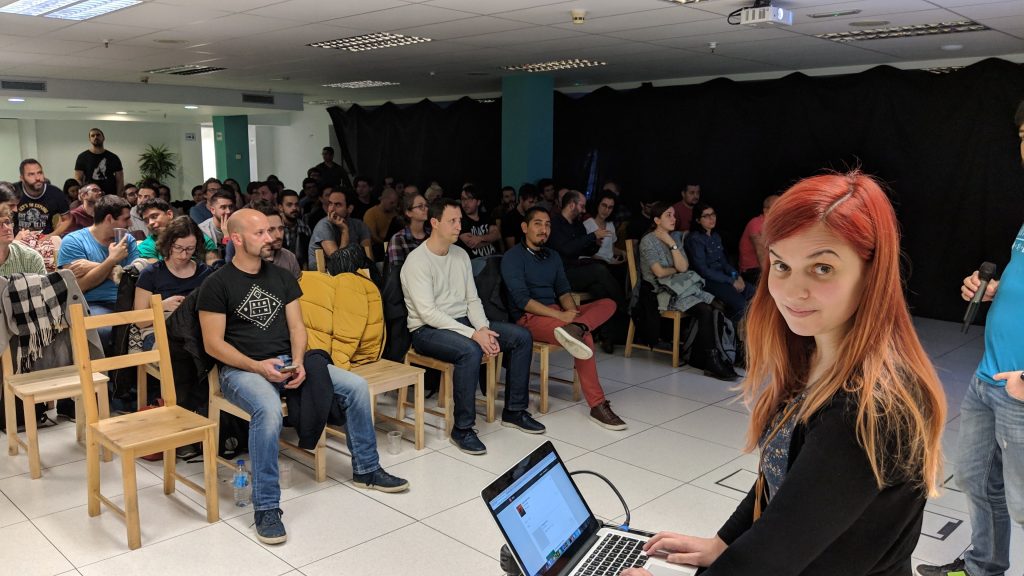
Meetups usually gather between 30 and 80 attendants.
The ratio of women is one of the sore spots in our Meetup: they are hardly 10~15%. We have tried hard to have more female speakers and attendees but have not been too successful
 Do you think that people from your country are accustomed to the existence of such groups? Are they interested in them?
Yes, there are many groups where anyone can learn about anything, from WordPress to Vue.js. Our main problem is to keep doing interesting things and to make people actually go to events, because we are all so busy, but I guess that is the case everywhere
What’s new in your community? In terms of technology and around you?
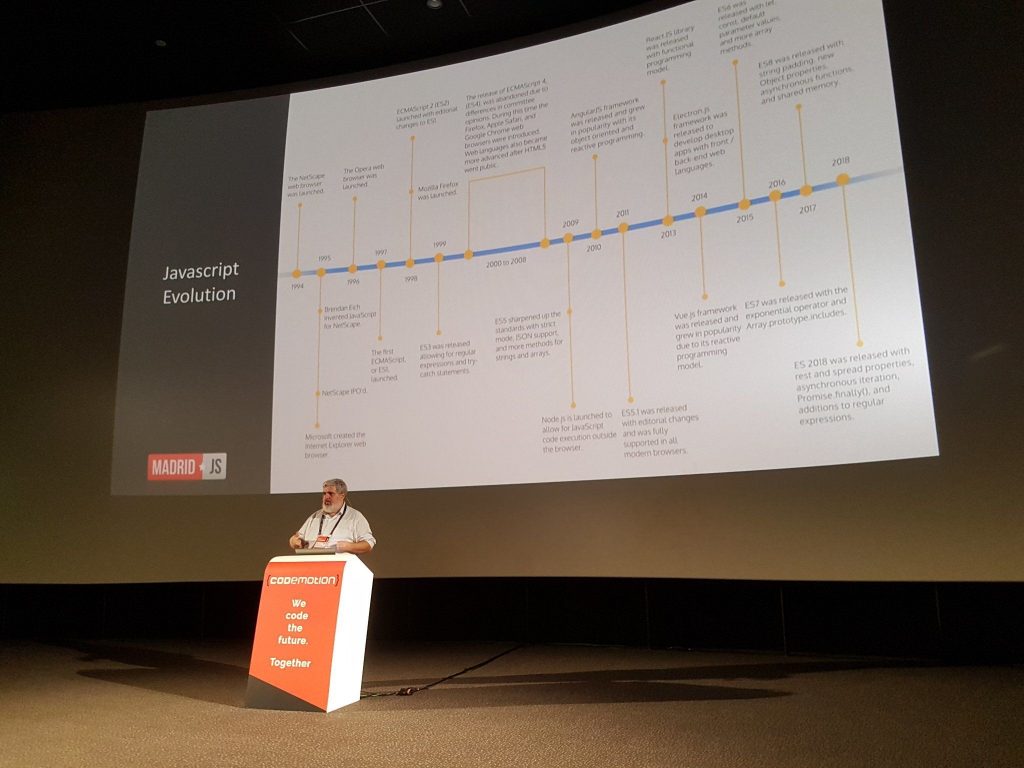
In terms of technology we are following closely on the recent developments in the language and in Node.js. Our colleague (and ex-organizer) Pablo Almunia is cooperating with the EcmaScript committee in the new specs.
In the personal space, precisely this month I am quitting as main organizer, and leaving the group in the capable hands of Manu and Javi.
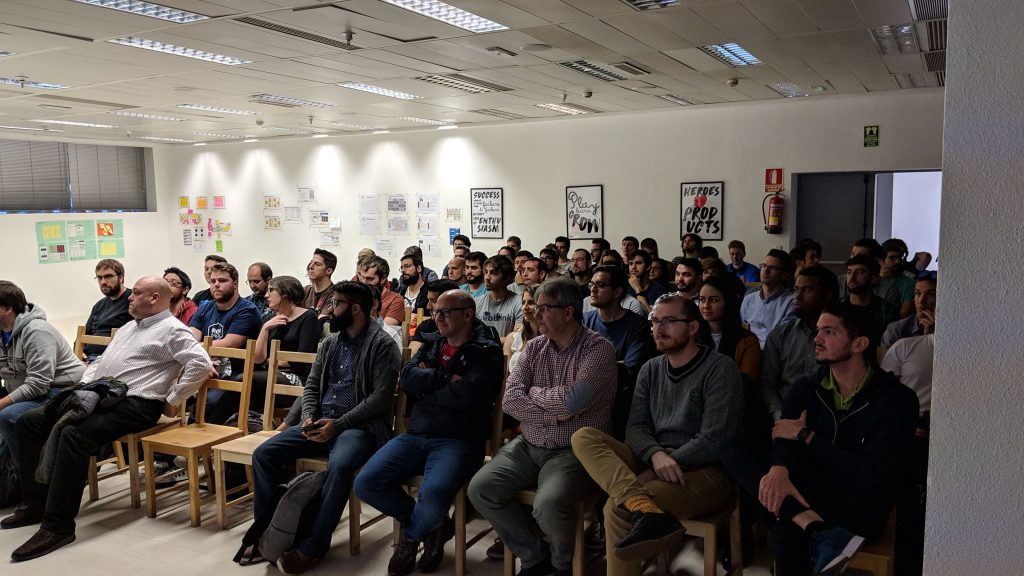 What was your most popular / most attended meetup ever? What did you talk about? Who was the speaker?
It was a 2017 event about Vue.js where our friend Rafael Casuso told us about this emerging (at the moment) framework. We gathered around 150 attendees.
Are you organizing events or other initiatives?
I helped organize JSDayES from 2015 to 2017: it grew from nothing to an event with more than 700 attendees. I’m an organizer of Node.js Madrid, our sister meetup where we gather monthly to learn about Node.js Madrid. I’m also in the Program Committee for Codemotion, one of the largest technology conferences in Spain.
How do you maintain the user group – who finances you? Is there a membership fee?
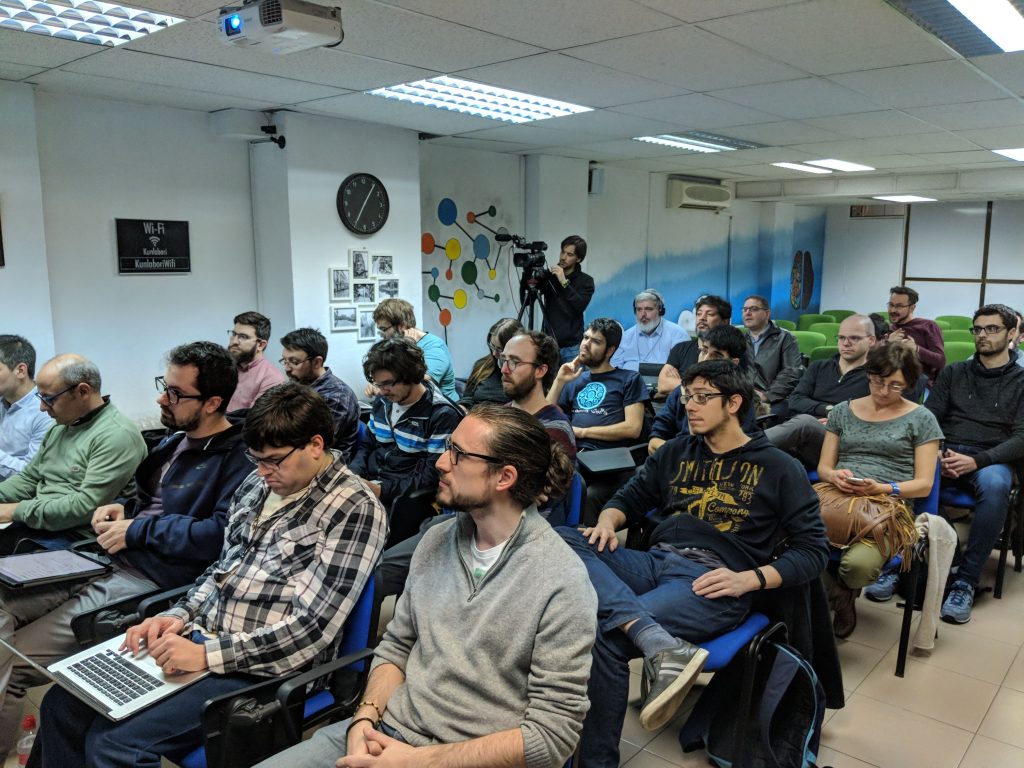 We are a grassroots group led and organized by volunteers. We have an open GitHub repo where anyone can propose talks, for maximum transparency with the community.
I pay personally for the Meetup subscription which is not too high, around €50 per year. Membership is completely free and we don’t charge for meetups. We have had many sponsors that have offered mainly facilities, but have also paid for food and drinks after gatherings.
Is everything self-initiative? Do you plan to become part of a global unit of such a community?
We have collaborated in several occasions with other organizations from Spain (both within and without the JavaScript ecosystem: joint meetups with VueJS Madrid and with MadridJUG come to mind), and also with international initiatives (at Node.js Madrid we have run a couple of NodeSchools). We have not received offers to join international organizations.
What events and big conferences do you follow and try your best to attend?
I help Codemotion with program selection and thus follow them closely. I like attending other international conferences like FullStack London.
 Do you plan visiting Bulgaria?
I would love to! But unless some conference invites me, I’m afraid I cannot justify the trip with my family
How can people join your user group or keep in touch with you?
First, you can join MadridJS from anywhere in the world. In our mailing list there are job offers and events in Spanish regularly; some are in English.
You can also follow me on Twitter.
We will need some 5-7 HQ pictures from your meetups, photos of people from the community, etc. Thank you for your time!
]]>Tell us about your user group. Who is the main organizer and how/when did it start? What people do you aim, in what positions: Developers, QAs or other IT specialists?
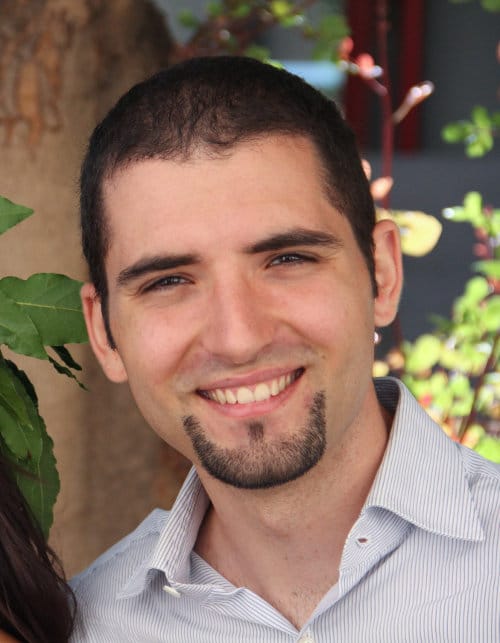 Our group is the PHP User Group of our city, Milan. We’re focused on PHP so obviously we target developers, but we don’t target a specific level of expertise.
How many people are part of the community in Madrid? Are there a lot of Java developers?
Here in Milan there are a lot of tech companies, it’s probably the biggest city in Italy in that regard; there are really a lot of developers.
How often do you meet? Where?
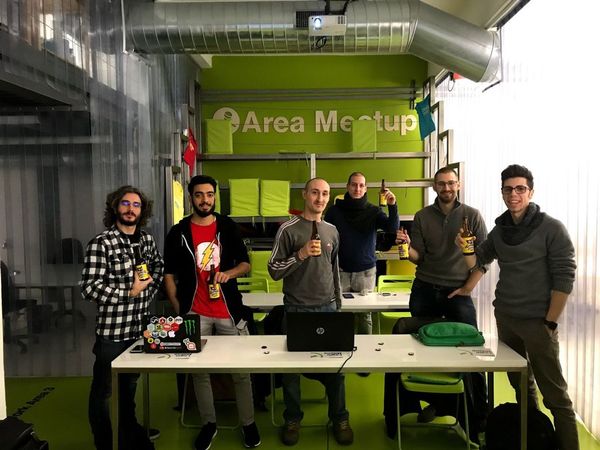
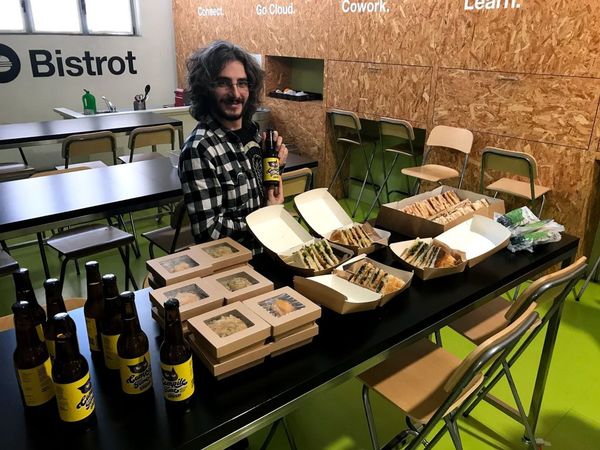
We meet once a month, generally on the second or third Wednesday. We’re very lucky because, due to the concentration of companies in our city, we’re able to be hosted by a different company each month. Our formula is “doors open at 19, the talk starts at 19:30!”; in the meantime we can eat and drink something (if the host sponsored something) and meet and chat together: it’s a perfect situation to get to know fellow developers from other companies, and expand your network.
How many people are participating in the #PUGMi? What is the ratio of men: women?
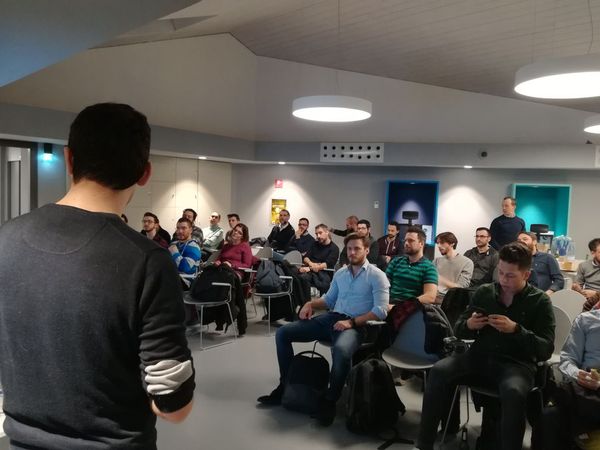
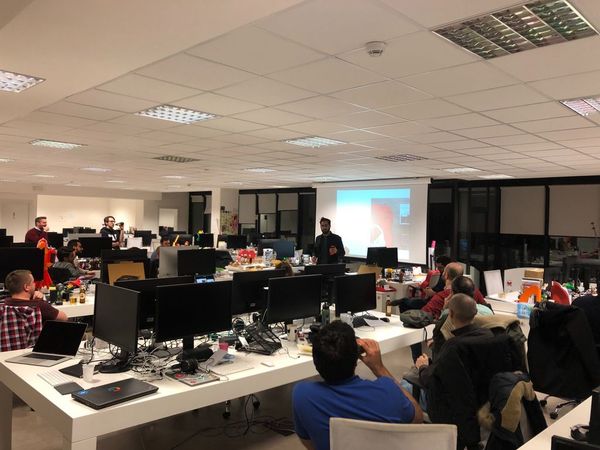
Our Meetup account recently surpassed one thousand subscribers, and we have around 3-4 hundred active users there. We have an average attendance at every event that goes from 20-30 to 40-50, normally depending on the topic.
Do you think that people from your country are accustomed to the existence of such groups? Are they interested in them?
Since we have many Meetups in our city, I think there are a lot of developers that are accustomed to this kind of gatherings. But I know for a fact that we’re living in a “happy bubble” of knowledge-sharing, focused professionals, and there are a lot of small and big companies where our craft is not valued so much and developers don’t know that there’s so much to learn and grow in their profession.
 What’s new in your community? In terms of technology and around you?
I think that in the past months the hottest topic has been Kubernetes: we had that as a topic for two months in a row and the attendance was very high regardless! Many were interested in getting to know the technology and learn from the experience of those who are already using it. I also think that after the summer PHP 7.4 will be the hot topic: the new version is coming this november, they just released the first alpha version, and it will be the last minor for the 7 series; last but not least, it’s packed with new interesting features, like typed properties [https://wiki.php.net/rfc/typed_properties_v2], preloading [https://wiki.php.net/rfc/preload] and covariant returns / contravariant parameters [https://wiki.php.net/rfc/covariant-returns-and-contravariant-parameters]
What was your most popular / most attended meetup ever? What did you talk about? Who was the speaker?
We had a few highly attended meetups! I think the record was when Microsoft hosted us at their new building in the city center, we reached more that 70 attendees, and Christian Nastasi talked about the repository pattern [https://www.meetup.com/it-IT/MilanoPHP/events/238737538/]. Another highly attended meetup was one where I was test-driving a talk that I did at PHPDay 2018 about a case study in implementing event sourcing [https://www.meetup.com/it-IT/MilanoPHP/events/244650417/].
Are you organizing events or other initiatives?
Two years ago we helped organizing SymfonyDay, which is a small italian conference was organized in a different city every year, and it’s focused on the Symfony PHP framework. From this year the event is gone international, and it will fully in english, and hosted in Verona this October [https://2019.symfonyday.it/].
How do you maintain the user group – who finances you? Is there a membership fee?
Our user group is free, and we rely on our hosts for a location and the eventual food and drinks; we get some help from Grusp [http://grusp.org/] (they pay our Meetup account), which is a non-profit that “fathers” all the italian PHP user groups, and organizes a bunch of conferences, some of international level (PHPDay, JSDay).
Is everything self-initiative? Do you plan to become part of a global unit of such a community?
Ans said in the previous answer, we’re already part of a “bigger family”, so we already have connections with other PUGs in our country; we normally hold an informal meeting of organizers during PHPDay, we’re we talk about how’s going and what we can do in the following year.
What events and big conferences do you follow and try your best to attend?
I normally attend PHPDay and SymfonyDay in Verona, and Codemotion in my city, Milan. This year I’ll be taking a detour, and I’ll be attending SymfonyCon in Amsterdam.
Do you plan visiting Bulgaria?
I don’t know, maybe for a tech conference? I tend to “budget” the time away from my family, but I would love to see a different, big conference each year outside of my country to expand my horizons.
How can people join your user group or keep in touch with you?
Our main channel is our Meetup account [https://www.meetup.com/it-IT/MilanoPHP/] where we announce our event, but we also have a Twitter account [https://twitter.com/MilanoPHP], a group-email for organizers [[email protected]] and a blog [https://milano.grusp.org/]
]]>How did you start organizing the JUG?
Aleksej: The idea of organizing Java User Group was born in Autumn of 2011 during Devoxx Belgium conference. The first meetup was organized in March 2012. We aim different people and we want to keep our community diverse.
We have 4 people who are founders: Vaidas Pilkauskas, Kasparas Rudokas, Mindaugas Žakšauskas and Aleksej Šipulia.
Does Java really bring people together?
Aleksej: Yes. People enjoy participating in meetups and value informal discussions before and after gathering.
How much have you grown lately and how many people are part of your UG today?
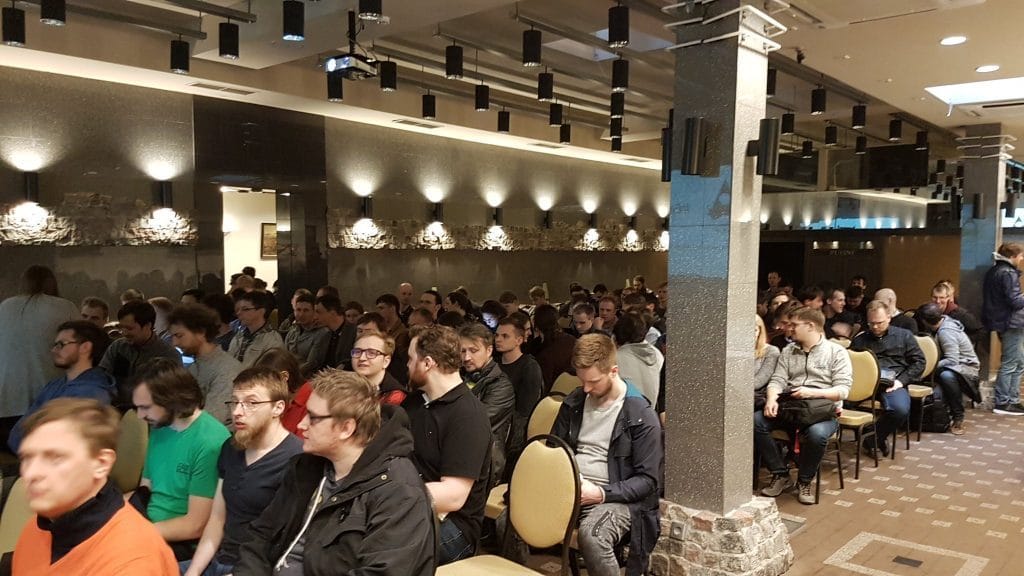
Aleksej: 7 years ago during the first meeting we had only 15 participants. Now we have a strong 1000+ Java and JVM enthusiasts community.
Aleksej: We try to meet once per month (every second Wednesday), but it highly depends if speakers are available.
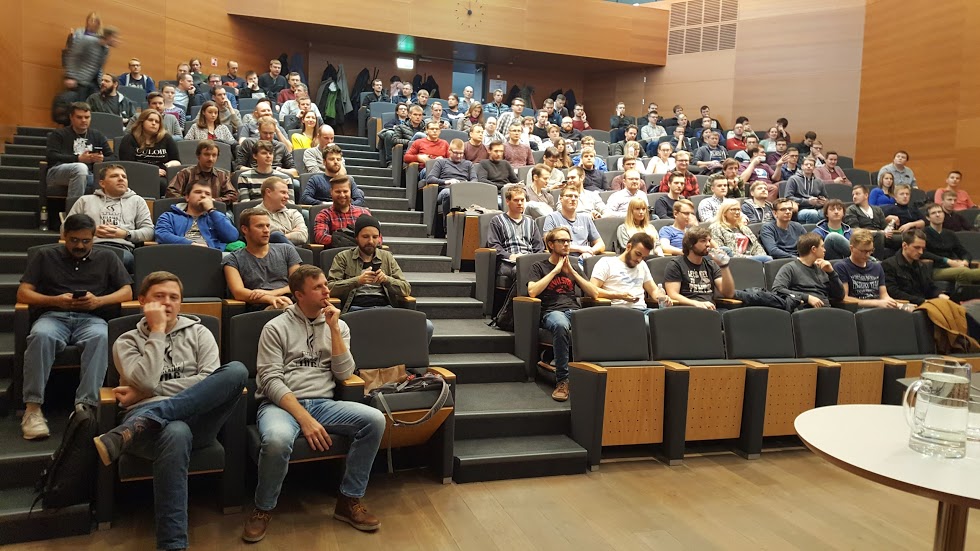
Aleksej: Each meeting we have 100-200 participants. Ratio is approximately 80/20.
Vaidas: Once we organized an event during International Women’s Day, and I think we had more than 50% of women in the audience. But in general gender balance is an issue which is hard to solve. We see it both in the audience and speakers who volunteer to give a talk.
Do you think that people from your country are accustomed to the existence of such groups? Are they interested in them?
Aleksej: We think yes. By starting the meetup in 2012, it triggered appearance of different other communities in Vilnius and Kaunas.
Together with other communities leaders we agreed to aggregate all events in one place. We have a simple page with a public calendar – http://usergroups.lt
What’s new in your community?
Vaidas: We have a few great companies working with latest technologies in Vilnius. It was very awesome to have our first meetup this year to be about GraalVM, which is pretty cool technology.
What was your most attended meetup ever?
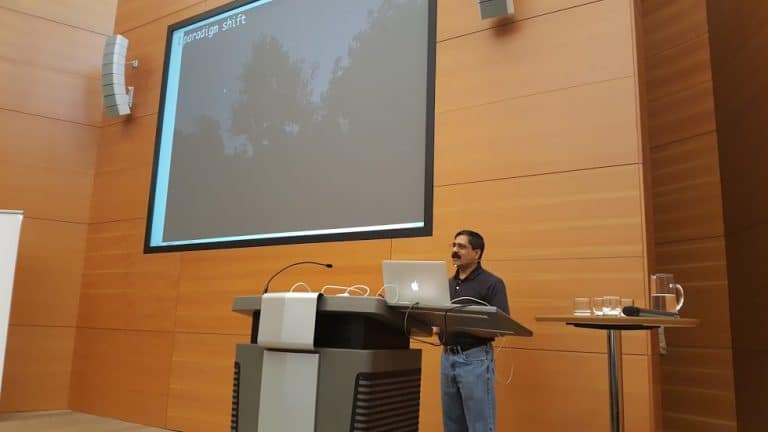
Aleksej: Two of the most popular events happened several years ago when we hosted Venkat Subramaniam and Juergen Hoeller.
Aleksej: Currently we organize only meetups.
Vaidas: As individuals we also take part in other meetups and conferences. This year I am one of the organizers of You Gotta Love Frontend conference.
How do you maintain the JUG: Who finances you, Is there a membership fee?
Aleksej: Our events are completely free. During the first year of our existence we did only barter with our sponsors. Later we made it formal and clarified sponsorship advantages. We registered a legal entity and introduced sponsorship packages.
Vaidas: Vilnius JUG is officially registered Java user group. We keep in touch with other communities in Baltic states.
Can you tell us an inspiring story from your JUG: Was there any meetup that sparked an idea for a project or a startup?
Vaidas: It’s hard to say if we make an influence on startup community, but we definitely are good forum for different people and companies to share and learn from each other. It’s good to see more and more companies understanding the importance of being part of the community.
What events and big conferences do you follow and try your best to attend?
Aleksej: Definitely Devoxx, but also we follow different other smaller conferences
Do you plan on visiting Bulgaria in the near future?
Vaidas: I think we need to find a good excuse and visit your country!
How can people join your user group or keep in touch with you?
Aleksej: People can follow us on Facebook
https://www.facebook.com/VilniusJUG/ and twitter
Or just write an email to us [email protected]
Vaidas: And we also are looking for speakers. That’s the best excuse to visit Vilnius!
]]>