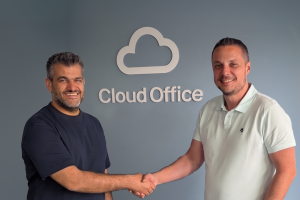

In recent years, hybrid working has become a preferred model for many teams and companies. Combining the benefits of remote work and in-office presence, this approach promises flexibility, work-life balance, and stronger collaboration. In this interview, we share the first-hand experience of Georgi Georgiev, Engineering Manager at Paysafe – what works, what doesn’t, and when physical presence truly makes a difference.
Georgi has been in the software industry for almost 20 years, starting his career as a junior programmer. He is currently a software team manager and has been in this role for more than 10 years. He is a supporter of innovation in the industry, both in technical and organizational aspects. His passion and strength lie in building and developing teams and people. On a personal level, he enjoys spending time with his family and playing sports.
What is your perspective on the hybrid work model?
The hybrid work model should be understood both as an opportunity to balance work and personal time, and to strengthen collaboration, teamwork, and social-professional engagement. I’m not claiming it’s the optimal approach for everyone. However, like in any other work arrangement, mutual trust and professional accountability are essential.
What works well and what doesn’t in the hybrid work model?
If the goal of introducing a hybrid model is achieving work-life balance, then flexibility in its implementation is key to its success.
What do you think is the optimal balance between office and remote work for software teams?
Personally, I believe a healthy balance is around half of the time. I’m not a fan of extremes – I don’t think 5/5 office presence yields better results than 4 or 3 out of 5 days.
On the flip side, 1 out of 5 is the least productive setup in my experience. People spend most of the time socializing over lunch and coffee, and that day ends up with near-zero productivity. A possible mitigation of this effect is using that day for team meetings like PI planning or scrum ceremonies.
Can you give an example of when being in the office led to a faster or more creative solution to a problem?
Any developer would think of pair programming situations. But personally, I believe any decision-making scenario is resolved much faster when people are physically together – full communication dynamics are activated, and a psychologically safe environment is created.
Have you noticed a difference in how junior or new engineers develop in a hybrid setup compared to fully remote?
For newcomers in the profession, being close to more experienced colleagues – mentors, buddies, and the team – is much more productive. Like any beginner, they often face “reinventing the wheel” challenges, and it’s much more effective to get immediate help from the person at the next desk than to lose days trying on their own or waiting for replies through digital channels.
Are there aspects of engineering work (e.g., code reviews, pair programming, architecture discussions) that are better in person?
All communication phases are more productive in person because they include emotion and body language. This helps build a psychologically safe environment where participants are more open to sharing ideas and solving problems.
In contrast, when everything happens behind screens, there’s always room for misinterpretation – of both words and potential emotions. Using a second language adds another layer of complexity due to language barriers.
What does your team do to make in-office time meaningful rather than “presence for the sake of presence”?
We use the time for discussions and decision-making – whether part of scrum ceremonies. Morning meetings are always stand-ups.
Lunch and especially short coffee breaks provide regular opportunities for team bonding and getting to know each other. These small but consistent interactions are more valuable than they seem – they let us see each other through all seasons, at different times of day, and in varied emotional states.
After all, we’re all human outside of work and face similar everyday challenges. When someone realizes their own issues are shared by the colleague next to them – both desk neighbours and team members – they feel more understood and accepted. The result: a safer and more productive work environment.
The material and images are provided by Paysafe