

Apple has released iOS 26.4 and iPadOS 26.4 in public beta, offering users and developers an early look at the latest refinements to its mobile operating systems. The update, now available through the Apple Beta Software Program, delivers not only under-the-hood improvements but also a range of new consumer-facing features across music, messaging, security and in-car entertainment.
What’s New for Users
One of the most visible additions arrives in Apple Music. iOS 26.4 introduces an AI-powered “Playlist Playground” feature built on Apple Intelligence. Users can generate a custom 25-song playlist from a simple text prompt such as “upbeat workout mix” or “calm evening.” The playlist can then be refined further, with the option to select matching cover art, offering a more personalized discovery experience.
Apple Music is also gaining a new “Concerts Near You” section designed to surface live shows from favorite artists. The feature allows filtering by date and genre, and users can switch locations when traveling, strengthening Apple’s push into music discovery and live event engagement.
In podcasts, Apple is responding to the broader industry’s shift toward video. The native Apple Podcasts app now allows seamless switching between audio and video episodes within the same show. Creators can publish video podcasts using HTTP Live Streaming (HLS), while listeners can move between formats instantly, including expanding to a full horizontal video display.
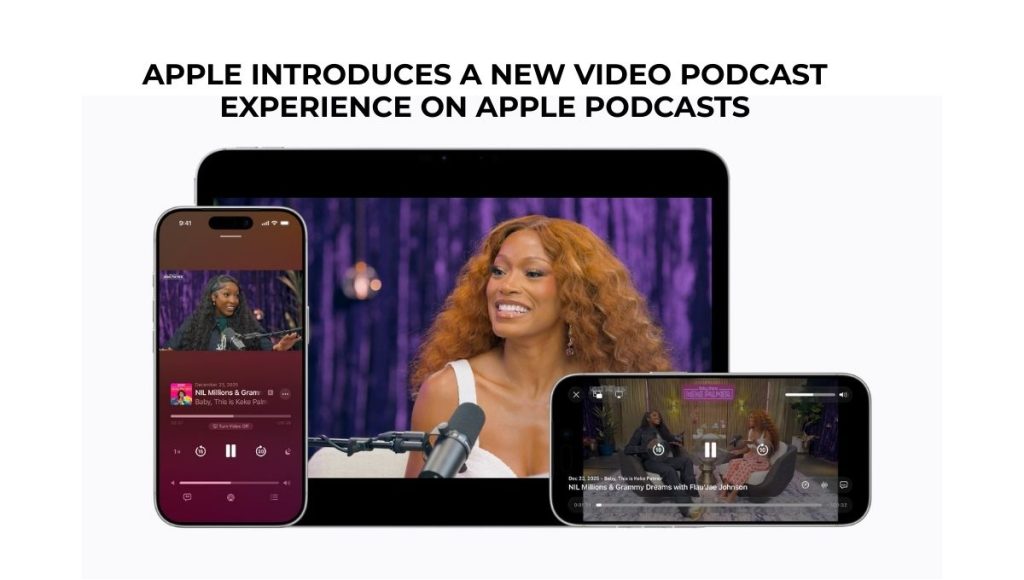
A new video podcast experience enabled by HLS technology lets users switch between watching and listening, move to a horizontal full display, as well as download videos for offline viewing.
Messaging is receiving a notable security-focused upgrade with encrypted Rich Communication Services (RCS), now entering testing in iOS 26.4. The end-to-end encryption aims to eventually secure conversations between iPhone and Android users at a level comparable to iMessage. For now, encrypted RCS is being tested between iPhones in beta, with conversations clearly labeled as encrypted. Apple says broader public support across iOS, iPadOS, macOS and watchOS will arrive in a later update, and availability will vary by device and carrier.
Security enhancements extend further. Stolen Device Protection is now enabled by default, adding additional biometric authentication requirements for sensitive actions such as accessing saved passwords or modifying account settings. By expanding the use of Face ID or Touch ID verification, Apple aims to reduce the risk of unauthorized access if a device is stolen and a passcode is compromised.
Drivers using Apple CarPlay will also see updates. CarPlay now supports in-car video playback for select apps, including Apple TV app, though only when the vehicle is parked to maintain safety standards. The feature introduces new entertainment options for passengers during stops or extended waits.
Developer and Enterprise Enhancements
The beta release builds on the AI features first introduced earlier in the iOS 26 cycle, refining contextual suggestions, system-wide writing assistance and predictive automation tools. Apple has also adjusted notification management and Focus mode behaviors to reduce friction across productivity workflows, while optimizing battery performance under heavier AI-related processing loads.
For developers, iOS 26.4 includes updates to SDK frameworks, improved debugging tools and expanded testing support for apps integrating advanced machine learning models. The release notes highlight fixes to SwiftUI rendering, enhancements to background execution policies and improved compatibility with third-party extensions.
Enterprise users are also seeing incremental updates aimed at device management and security compliance. Apple has patched several vulnerabilities and strengthened sandbox protections, reinforcing its positioning around secure mobile deployments for corporate environments.
As with any public beta, Apple cautions users that performance inconsistencies and app compatibility issues may occur. Developers are encouraged to test applications thoroughly before the final release candidate is issued.
Material by Veronika Atanasova
Image 1: Apple Newsroom
Image 2: Apple, iOS