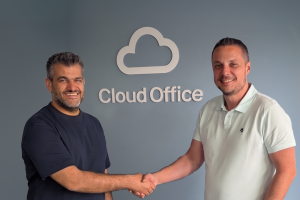

Vladislav Grancharov skilfully balances his role as Director of Software Development at Paysafe and as a father of two young boys, while nurturing his passion for finance and payments. Over his 23 years of experience in the IT industry, he has gone through all levels of a career – from junior engineer to leading large teams. He believes that long-term commitment, strategic thinking, and a sustainable work culture are key to building high-performing engineering organizations focused on quality and innovation.
In such a dynamic industry like fintech, how do you manage to maintain balance between work and personal life?
With the rise of new technologies, there is no longer a real boundary between work and personal life. The idealized “perfect work-life balance” is, to me, an illusion. No matter how much we try to keep them separate, the pressure of deadlines and tasks inevitably spills into our personal time, while personal responsibilities also make their way into the work environment.
I like the concept of work-life integration. I try to structure my day so that work and personal life complement each other instead of competing. Family dinners and weekends are “sacred” – the laptop stays closed. I also schedule short breaks during the day to recharge and gain a fresh perspective. This way, my career keeps progressing, and at the same time my children see me as a present parent, not just someone behind a screen.
What practices or habits do you find most helpful in building a healthy work culture?
For me, the most valuable thing is that people know they can openly talk about their workload and needs.
We are in an industry that never stops, but without transparency, stress builds up and eventually bursts out at the wrong moment. That’s why in my team I encourage flexibility and lead by example in respecting boundaries. The focus is not on watching the clock from 9 to 6, but on whether the work gets done.
We also try to keep meetings purposeful, not just “for sport.” At the same time, we don’t forget their social element – after all, we are humans first. When people feel trust and support, they give their best without burning out.
Do you have personal strategies that help you set boundaries and avoid burnout?
Saying “no” is perhaps the hardest but also the most valuable habit. I use deep work blocks (at least twice a day for 30 minutes) to maximize productivity. I also take short walks around the office or at least have a proper lunch break, even on the busiest days – the brain works better when you give it some air.
When I feel burnout creeping in, I disconnect completely from emails and chats for an entire weekend. This is not a luxury, but an investment in my own effectiveness.
How do you think the topic of work-life balance will evolve in IT and fintech in the coming years?
We will talk more about integration rather than perfect separation. Hybrid work and automation will give us the freedom to organize our days according to personal priorities. To me, companies should establish clear rules based on delivered results, not on staying in the office or being online.
A well-rested person with clear priorities can be much more effective. As I said, it’s not balance but integration that will be the decisive factor in the battle for talent.
What are the main challenges for people in the tech field when it comes to balance?
The biggest challenge is the feeling that we need to be “always on.” The fast pace makes you think that if you stop, you’ll fall behind. Endless meetings and constant notifications eat up the time for real focus.
There is also a culture of “heroism” – working late to save a project. It happens and can be useful, but only if it’s an exception, not the rule. We need to consciously pause and reset the rules of the game.
What role do flexible work models – such as hybrid work – play in better combining personal and professional life?
The hybrid model is a huge advantage when used wisely. It saves commuting time that can be invested in family or personal projects. It gives you the choice to work where you are most productive – at home for focus, or in the office for team energy. But for it to work, there needs to be a clear framework – when it’s important to be together and when distance is the better option.
For my personal effectiveness, I prefer to be in the office. But having the flexibility to stay home when needed gives me the peace of mind not to worry about “what if.” Every worry avoided is energy I can channel into something useful.
What advice would you give to your colleagues in the sector to find a more sustainable rhythm between personal and professional life?
Decide what is important to you outside of work and protect it as a top priority. Find a way to align it with your work process. Trust your team and don’t try to be everywhere. Work smart, automate, and prioritize instead of simply piling on hours. And most importantly – don’t wait until you feel burnout to start taking care of yourself.
The material and image are provided by Paysafe